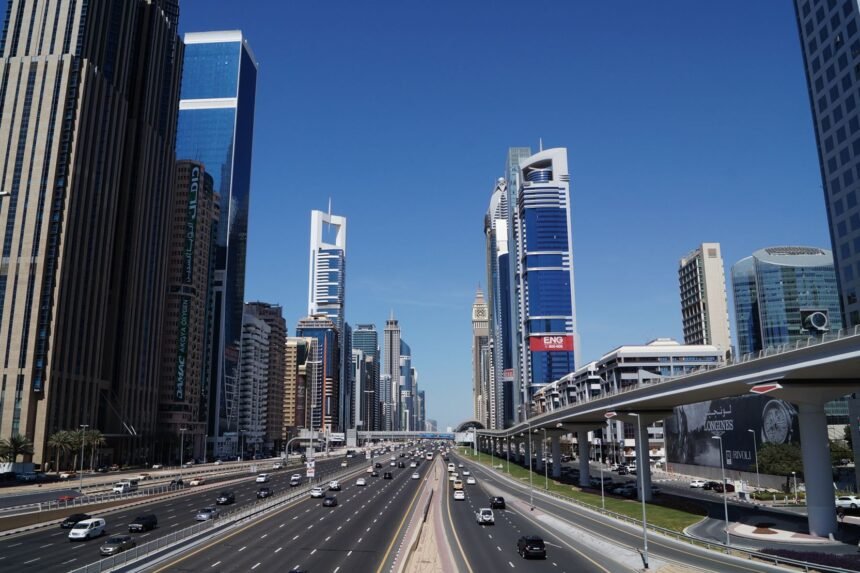
Mohammed Bin Zayed Road is one of the UAE’s major highways, connecting important communities and emirates across the country. Known as E311, the road extends from the Abu Dhabi area towards Al Riffa in Ras Al Khaimah and passes through Abu Dhabi, Dubai, Sharjah, Ajman and Umm Al Quwain. In Dubai and the Northern Emirates, it is commonly known by its current name, while the same E311 route has a different name in Abu Dhabi.
The highway plays an important role in daily commuting, freight movement and connections between residential, commercial and industrial areas. Its position also makes it useful for drivers travelling between Dubai and the northern emirates without passing through the centre of the city. This guide explains the route, major connections, nearby areas, exits, public transport, driving considerations and frequently asked questions.
Mohammed Bin Zayed Road at a Glance
| Detail | Information |
|---|---|
| Road number | E311 |
| Common name in Dubai | Sheikh Mohammed Bin Zayed Road |
| Approximate length | 220 km |
| Starts | Abu Dhabi area |
| Ends | Al Riffa, Ras Al Khaimah |
| Emirates served | Abu Dhabi, Dubai, Sharjah, Ajman, Umm Al Quwain and Ras Al Khaimah |
| Road type | Major UAE highway |
| Main use | Inter-emirate and city commuting |
| Public transport | Bus services operate on sections of the route |
The UAE Government identifies E311 as a major highway stretching approximately 220 kilometres from the Abu Dhabi–Al Ain Road area to Al Riffa in Ras Al Khaimah. Within Abu Dhabi, the route is known as Sheikh Mohammed bin Rashid Road, while Dubai and the Northern Emirates use the name Sheikh Mohammed bin Zayed Road.
What Is Mohammed Bin Zayed Road?
Mohammed Bin Zayed Road is the commonly used name for E311 in Dubai and the Northern Emirates. It is one of the country’s main north-south transport corridors and provides connections between major urban areas, residential communities, industrial districts and other highways.
The road is particularly important for people travelling between Dubai and Sharjah, Ajman and the northern emirates. It also connects with several major roads inside Dubai, allowing drivers to reach different parts of the city without relying entirely on Sheikh Zayed Road.
More Read
Route and Direction
The E311 route begins in the Abu Dhabi area and travels north-east through the UAE before reaching Al Riffa in Ras Al Khaimah. According to the UAE Government, the highway passes through Abu Dhabi, Dubai, Sharjah, Ajman and Umm Al Quwain before continuing into Ras Al Khaimah.
In Dubai, the highway runs through or near several major residential and development areas. Its connections include routes towards Al Khail Road, Hessa Street, Dubai–Al Ain Road, Al Awir and other important roads. This network makes E311 useful for both local journeys and longer inter-emirate trips.
Major Roads Connected to E311
One of the reasons the highway is so important is its connection with other major roads. Drivers can use interchanges and exits to move towards different parts of Dubai and surrounding emirates.
More Read
Important connections along the wider E311 corridor include Abu Dhabi–Al Ain Road, Sweihan Road, Al Khail Road, Hessa Street, Dubai–Al Ain Road, Dubai–Hatta Road and Al Rebat Street, among others. The exact exit to use depends on the destination and direction of travel.
Drivers should follow the overhead signs and use a current navigation application when approaching an interchange. Exit numbers and road layouts can change as infrastructure projects are completed, so older online directions may not always reflect the latest configuration.
Major Areas Near Mohammed Bin Zayed Road
The highway passes close to several important residential and commercial areas in Dubai. These include communities around International City, Dubai Silicon Oasis, Dubailand, Dubai Sports City and other developing areas.
Its location has also supported the growth of communities away from central Dubai because residents can use E311 to connect with other parts of the emirate. The road therefore serves not only through traffic but also people travelling between residential neighbourhoods and workplaces.
Dubai Silicon Oasis
Dubai Silicon Oasis is one of the prominent areas connected to the E311 road network. Drivers travelling towards the community can use the relevant interchange and follow signs for Dubai Silicon Oasis and surrounding areas.
Because the road network around Silicon Oasis has undergone changes over time, drivers should rely on current navigation instructions instead of older directions found online.
International City
International City is another major residential development located close to the E311 corridor. The highway provides access to the surrounding area and connects residents with other parts of Dubai.
The connection is particularly useful for commuters travelling towards Dubai’s eastern and northern districts. Traffic conditions can vary considerably depending on the time of day.
Dubailand
Several communities and developments within the wider Dubailand area have access to E311 and its connecting roads. This gives residents an important route towards other parts of Dubai and neighbouring emirates.
Because Dubailand covers a large area, the most suitable exit depends on the specific community or development you are visiting. Checking the destination in a navigation application before starting the journey is recommended.
Mohammed Bin Zayed Road and Dubai Traffic
Traffic is one of the most important considerations for people using E311, particularly during weekday commuting periods. The highway carries large volumes of vehicles travelling between Dubai, Sharjah and other emirates, so congestion can develop around busy interchanges and connecting roads.
RTA has carried out several improvement projects along the corridor to increase capacity and improve traffic flow. For example, an improvement to the Al Rebat Street exit increased its capacity from 3,000 to 4,500 vehicles per hour and reduced the reported travel time from E311 towards Business Bay Crossing from around 10 minutes to 4 minutes.
Traffic conditions can still change quickly because of accidents, roadworks, weather or unusually high traffic volumes. Drivers should therefore check live traffic conditions before starting a longer journey.
Driving on Mohammed Bin Zayed Road
Mohammed Bin Zayed Road is a high-capacity highway, so drivers should pay close attention to lane discipline, speed limits and road signs. Drivers travelling at different speeds should avoid sudden lane changes and should leave sufficient space between vehicles.
When approaching an exit, move into the appropriate lane early rather than making a last-minute change. This is especially important around large interchanges where several lanes can separate into different directions.
Drivers should also avoid relying on memory when using unfamiliar exits. Dubai’s road infrastructure continues to develop, and new bridges, lanes and interchange arrangements can change the way a particular route works.
Public Transport on E311
Although E311 is primarily a road for motor vehicles, public buses also use parts of the corridor. RTA has operated bus services connecting Dubai with Sharjah through the highway.
One example is Route E311, which RTA launched between Rashidiya Metro Station in Dubai and Al Jubail Bus Station in Sharjah. The route passes through Sheikh Mohammed bin Zayed Road and serves several stops in Sharjah before reaching Al Jubail.
Bus routes and schedules can change, so passengers should check the latest RTA journey information before travelling. RTA’s journey planner can also be used to find current public transport options.
Is E311 the Same as Emirates Road?
No. This is an important distinction for people unfamiliar with UAE road names. E311 is Sheikh Mohammed bin Zayed Road in Dubai and the Northern Emirates, while E611 is known as Emirates Road.
The two highways serve different corridors. E611 provides an alternative route around the main urban areas and connects Abu Dhabi with the northern emirates without passing through central Dubai. The UAE Government lists E611 separately from E311 in its official road network information.
This distinction matters when entering a destination into a navigation application. Searching for the road number, such as E311 or E611, can help avoid confusion when both roads provide routes towards a similar destination.
Mohammed Bin Zayed Road vs Sheikh Zayed Road
Although their names are similar, E311 and Sheikh Zayed Road are different highways. Sheikh Zayed Road is the major urban corridor running through central Dubai, while E311 provides a wider route around and through the outer parts of the emirate.
For many journeys between residential areas and the northern emirates, E311 can provide a more suitable route than travelling through central Dubai. The best road depends on the starting point, destination and current traffic conditions.
Drivers should compare live traffic before choosing between major highways. A route that is normally faster can become slower during peak periods or after an accident.
Safety Tips for Drivers
When using E311, drivers should follow the posted speed limit and maintain a safe distance from other vehicles. Large trucks and buses also use major sections of the highway, so drivers should be prepared for differences in vehicle speed and size.
Avoid sudden braking or lane changes, especially near exits and interchanges. If you miss an exit, continue safely and use the next suitable route rather than attempting an unsafe manoeuvre.
Motorists should also keep their attention on the road and avoid using a mobile phone while driving. Checking the route before starting the journey is preferable to making complicated navigation decisions while travelling at highway speed.
Best Time to Travel
There is no single time that guarantees light traffic on E311 because congestion depends on the section of road, direction and destination. Weekday commuting periods generally see heavier movement, particularly on routes connecting Dubai with Sharjah and other northern areas.
Checking live traffic before leaving is more useful than relying on a fixed travel-time estimate. If your journey is flexible, travelling outside the busiest commuting periods can help reduce delays.
Weekend conditions can be different from weekday traffic. Shopping areas, events, roadworks and incidents can also create temporary congestion, so drivers should check current conditions even when travelling outside normal peak periods.
Why Is Mohammed Bin Zayed Road Important?
Mohammed Bin Zayed Road is important because it connects a large number of communities and provides a major inter-emirate route. Its position between several urban areas allows residents, workers and commercial vehicles to travel across the UAE without depending solely on roads through central Dubai.
The highway also supports development outside the traditional city centre. Residential communities, industrial areas and commercial developments benefit from access to a major road corridor, making E311 an important part of the UAE’s wider transport network.
Frequently Asked Questions
What is the road number of Mohammed Bin Zayed Road?
The road number is E311. In Dubai and the Northern Emirates, it is commonly known as Sheikh Mohammed bin Zayed Road, while the UAE Government uses a different name for the same route within Abu Dhabi.
How long is E311?
The UAE Government describes E311 as approximately 220 kilometres long, extending from the Abu Dhabi–Al Ain Road area to Al Riffa in Ras Al Khaimah.
Which emirates does E311 pass through?
The route passes through Abu Dhabi, Dubai, Sharjah, Ajman and Umm Al Quwain, before reaching Ras Al Khaimah.
Is E311 the same as Emirates Road?
No. E311 is Sheikh Mohammed bin Zayed Road in Dubai and the Northern Emirates. Emirates Road is E611, which is a separate highway.
Does a bus operate on E311?
Yes. RTA has operated Route E311 between Rashidiya Metro Station in Dubai and Al Jubail Bus Station in Sharjah, with stops along the route.
Does E311 connect Dubai and Sharjah?
Yes. The highway is an important route between Dubai and Sharjah, and public bus services have also used the corridor for travel between the two emirates.
Is E311 useful for reaching Dubai’s outer communities?
Yes. The highway provides access to and connections around several outer residential and development areas, including International City, Dubai Silicon Oasis and Dubailand.
What should I check before using E311?
Check the current traffic situation, roadworks, accidents and navigation instructions before starting your journey. This is especially useful during weekday commuting periods or when travelling through major interchanges.
Final Thoughts
E311 is one of the UAE‘s most important long-distance highways, linking Abu Dhabi with Dubai and the Northern Emirates. It serves a combination of daily commuters, residents, commercial traffic and travellers moving between emirates, making it an essential part of the country’s road network.
For drivers, the most important thing is understanding the difference between E311 and other major highways, following the correct exits and checking live traffic before travelling. With its extensive connections to Dubai’s outer communities and neighbouring emirates, E311 remains a key route for everyday travel across the UAE.